
No. 1
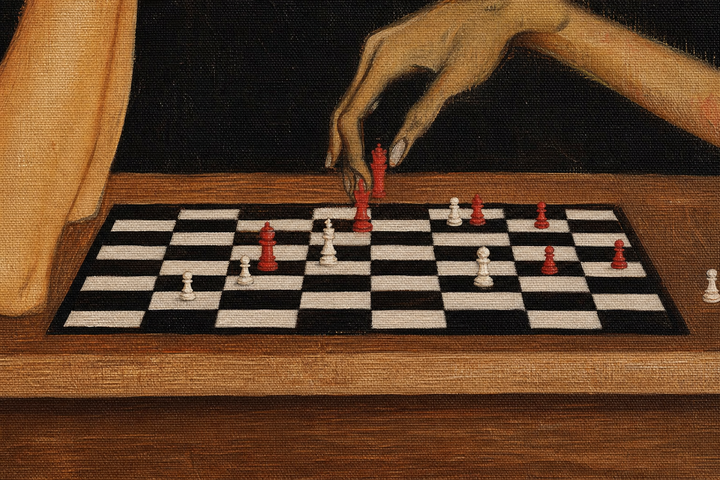
The position on the board
Red against white, mid game, still live. Zerge paints a real position rather than a symbol, which is why the young man's concentration reads as genuine hope.


Victoria Mortis, 1921. The original is a small panel painting that has never left private hands.
Old World Canvas · The Masterworks
Owe Zerge · Oil on panel, 1921 · Private collection
He is still hunting for the move that saves him. Across the table, the hourglass does the work.
A museum grade reproduction of the original
Order today, ready to hang by August 29
Museum weight 380gsm cotton canvas, printed with twelve channel archival pigment inks rated to resist fading for 100 years or more indoors, then hand stretched over kiln dried pine bars.
Every canvas is made to order. Printing and stretching take 1 to 3 business days. Tracked delivery takes 2 to 5 business days in the US, UK, Canada, Australia, and most of Europe. Shipping is free.
Hang it and live with it for 100 days. If it is not the piece you hoped for, send it back for a full refund and we cover the return. Transit damage is replaced free with a single photo.
Owe Zerge was a Swedish painter, born 1894 and died 1983, trained in the academic tradition and working for decades on the west coast of Sweden. He painted Victoria Mortis in 1921 on a panel measuring 45 by 49 centimetres, signing it with his monogram. The motif of a game of chess against Death is old and specifically Swedish: a medieval wall painting by Albertus Pictor in Taby Church outside Stockholm, made around 1480, shows the same contest and is the image later echoed in Bergman's The Seventh Seal. Zerge's painting sold at Bukowskis in Stockholm in June 2023 and remains in a private collection.
The Painting · 1921
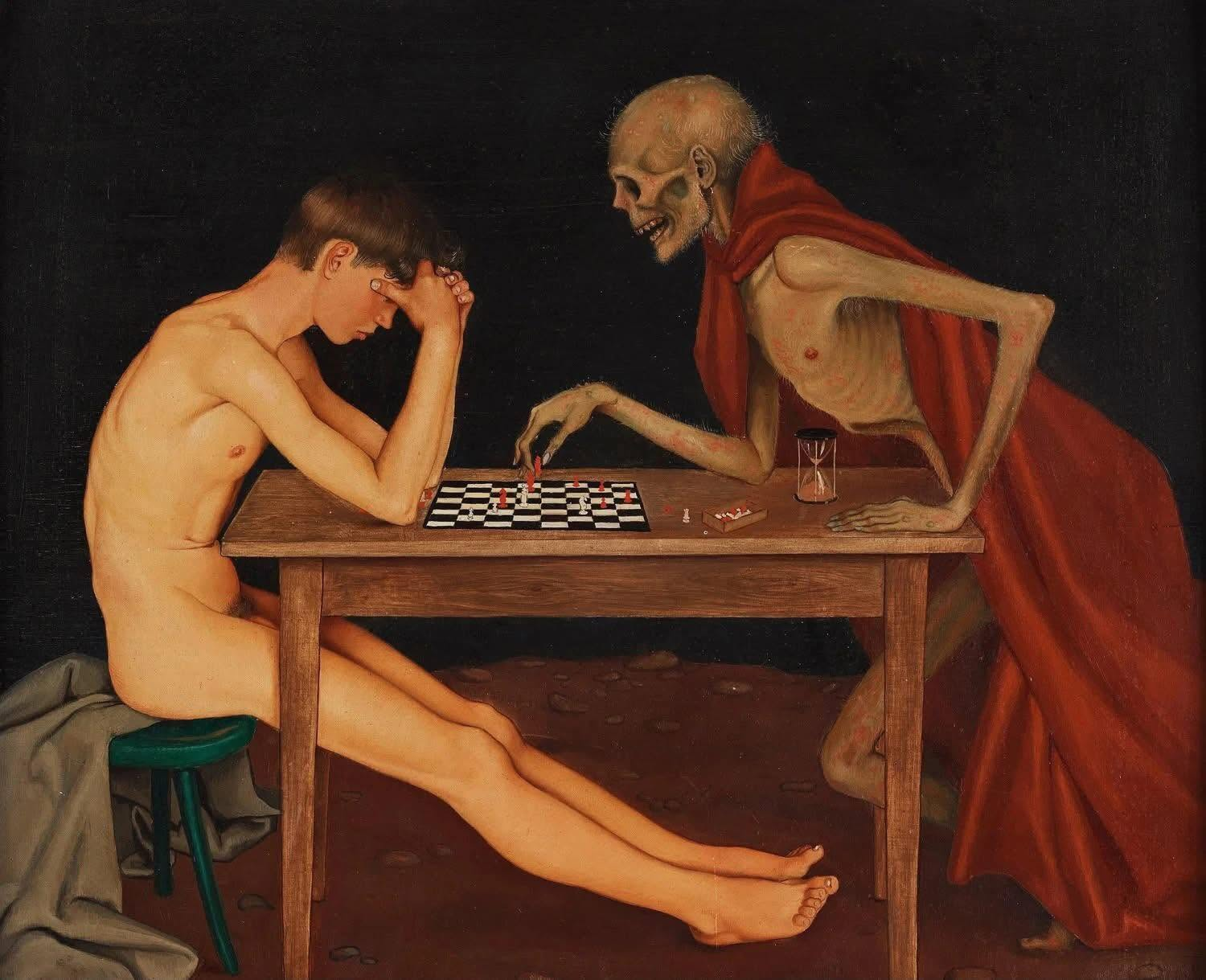
Zerge stripped the room down to three things: a man, a game he is losing, and the opponent who has never needed to hurry.
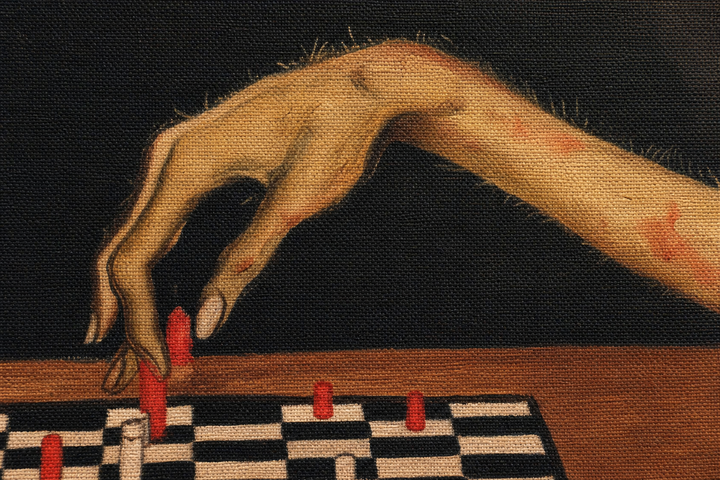
The young man has his head in his hand, working the board. He is still in it. He is still counting lines, still looking for the one continuation that holds. Across the table the opponent reaches out a thin hand to move a piece, unhurried, the way you play when the result was decided before you sat down. The title is Latin and gives the ending away: the victory of Death.
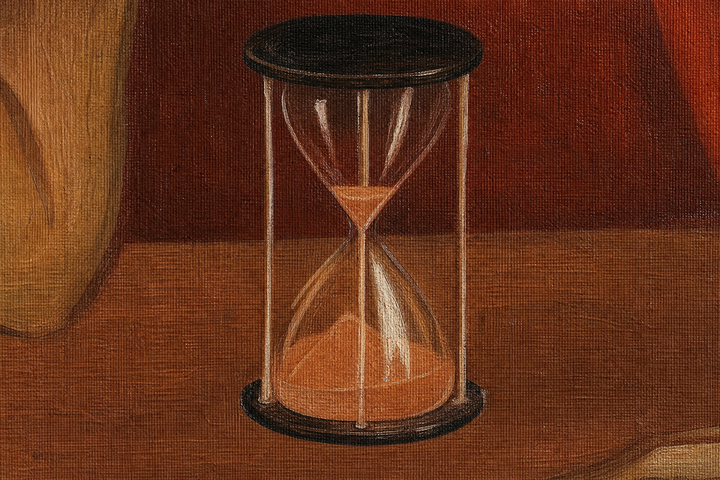
The smallest object on the table is the one that matters. An hourglass stands beside the board, and it is the difference between this game and every other game. A chess clock can be stopped. This cannot. Zerge painted it in 1921 on a panel barely larger than a sheet of paper, and he was working inside a Swedish tradition that runs back to a church wall outside Stockholm, where a medieval painter showed a knight playing chess with Death around 1480. That same wall painting is the one that later gave the world Bergman's The Seventh Seal. Zerge's version has no knight and no armour. Just a young man, undressed, with nothing to hide behind.
Look Closer
Three objects on one table, and the smallest of them is the one that settles it.
No. 1
Red against white, mid game, still live. Zerge paints a real position rather than a symbol, which is why the young man's concentration reads as genuine hope.
No. 2
Standing quietly beside the board. A chess clock can be stopped and this cannot, which is the entire difference between this game and any other.
No. 3
Reaching down to move a piece with no urgency at all. Death plays like someone who has never once needed to win quickly.
Printed at museum grade, so the details the story turns on stay razor sharp on your canvas.
The Canvas
A painting that has lasted since 1900 deserves better than a poster. Every canvas leaves the studio the way a conservator would ask.
Twelve channel archival pigment inks, independently rated to resist fading for 100 years or more indoors. The firelight stays warm for decades.

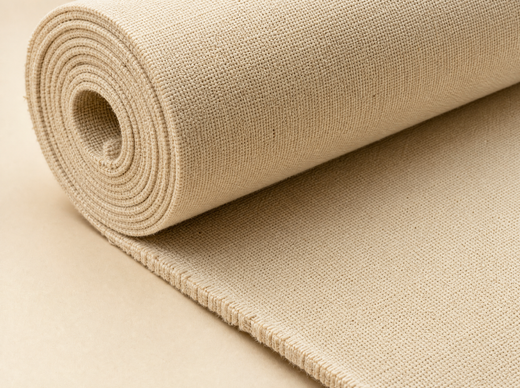
Museum weight woven cotton with a soft matte texture that holds the depth of Zerge's shadows instead of bouncing light off them.
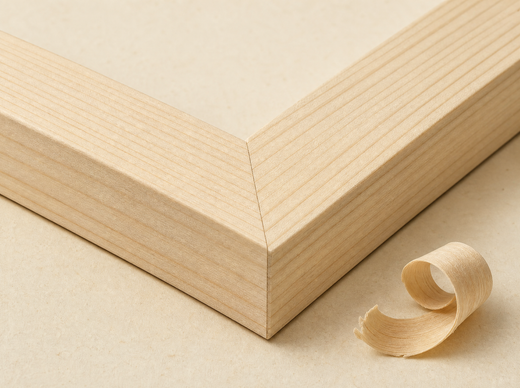
Hand stretched over solid kiln dried pine, cornered and tensioned so the canvas stays drum tight and never sags.
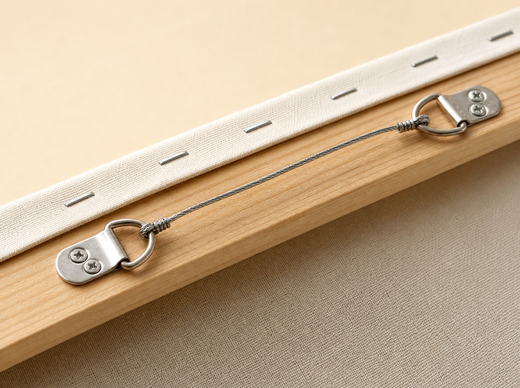
Hanging hardware arrives pre installed on every piece. Out of the box and on the wall in under five minutes, no tools.
Choose Your Finish
Both arrive ready to hang. The difference is the voice the painting takes on your wall.
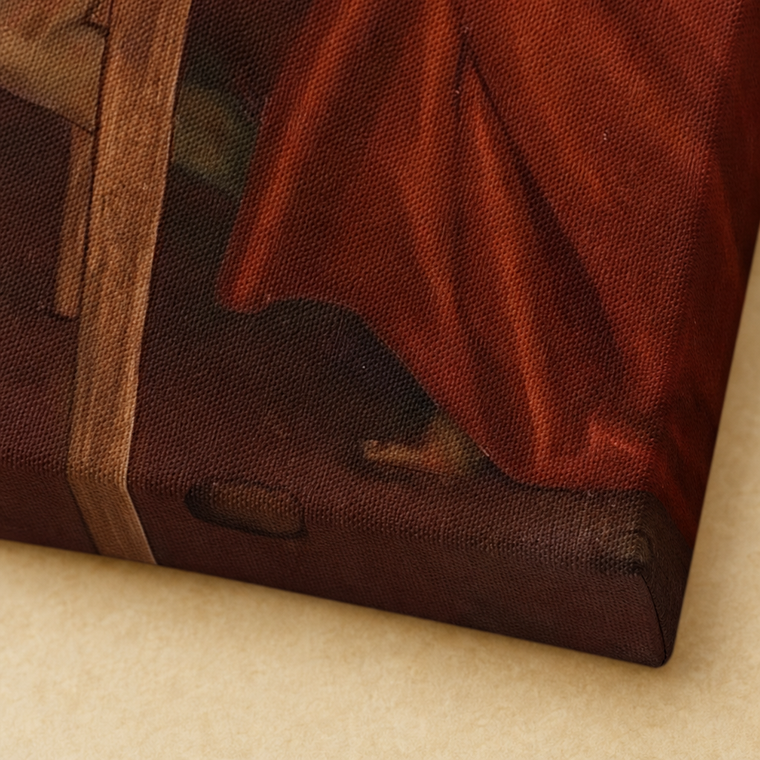
Gallery wrapped, the image folds around a deep 1.25 inch edge. Quiet and modern. The scene floats on the wall with nothing between you and the paint.
Choose it for
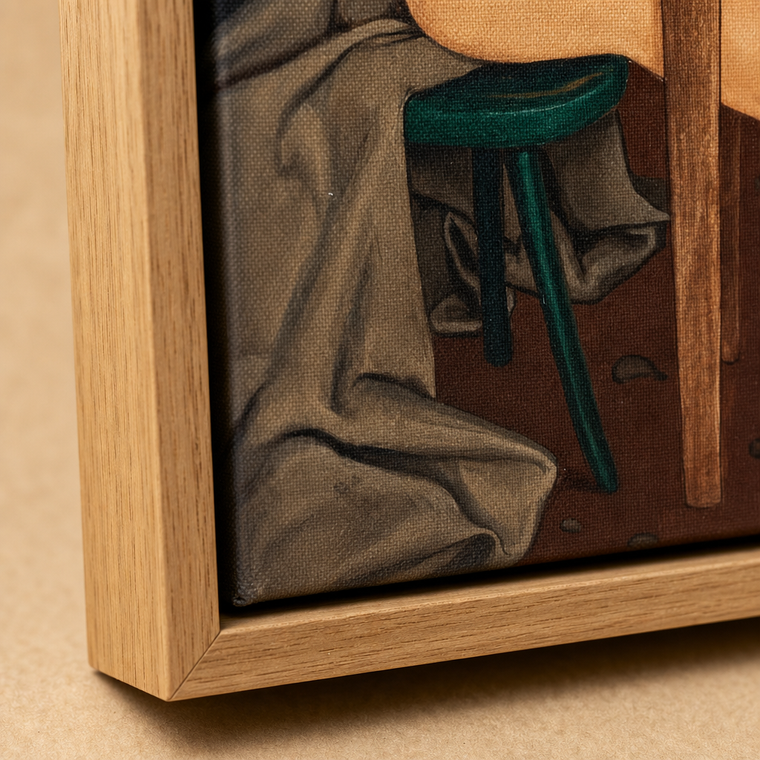
A solid wood floating frame with a fine shadow gap, the way museums case their canvases. The painting reads as the centerpiece of the room.
Choose it for
From Their Walls
Collectors tell us where it went and what changed in the room. Their words, kept whole.
“I knew Zerge only from auction catalogues. Having this on the wall of the study where I actually play chess was the correct decision.”
“Dark, yes, but it is beautifully painted and it makes people stop talking for a second. That is worth a lot in a room.”
“The hourglass is the detail everyone finds second and it changes the whole thing. Print quality is excellent at 20x16.”
Our Promise
Hang it. Live with it through morning light and lamplight. If it is not the piece you hoped for, send it back for a full refund and we cover the return.
Questions
Straight answers about what you receive, when it arrives, and how it is protected.
No, and you cannot see the original anywhere. It is a small panel painting, 45 by 49 centimetres, that has passed between private Swedish collections since it was made and sold again at Bukowskis in Stockholm in 2023. What you receive is a museum grade giclee reproduction on cotton canvas, hand stretched and ready to hang.
Not this one, but the same lineage. Bergman took the chess game with Death from a medieval wall painting by Albertus Pictor in Taby Church outside Stockholm, made around 1480. Zerge was working from that same Swedish tradition when he painted Victoria Mortis in 1921, 36 years before the film. If you know the Bergman image, this is its close relative: same contest, no armour, no beach, and a much younger opponent.
10x8, 15x12 suit desks, shelves, and small nooks. 20x16, 30x24 hold bedroom, office, console and mantel walls. 40x32 and 50x40 are the statement sizes. When in doubt, go one size larger. Undersized art is the most common regret we hear.
Each canvas is made to order. Printing and stretching take 1 to 3 business days, then tracked delivery takes 2 to 5 business days in the US, UK, Canada, Australia, and most of Europe. Shipping is free and you receive tracking the moment it leaves.
Send one photo of the damage and we ship a replacement at no cost. No return required, no forms, no debate.
Yes. Hanging hardware is pre installed on both the frameless and the wooden version. Unbox it, place a single nail or hook, and hang. Under five minutes, no tools.
Keep it out of direct midday sun and dust it with a dry soft cloth. The pigment inks are rated to resist fading for 100 years or more indoors, so care really is this simple.
Anything else, write to hello@oldworldcanvas.com and a person answers within a day.