
No. 1
The one pulling away
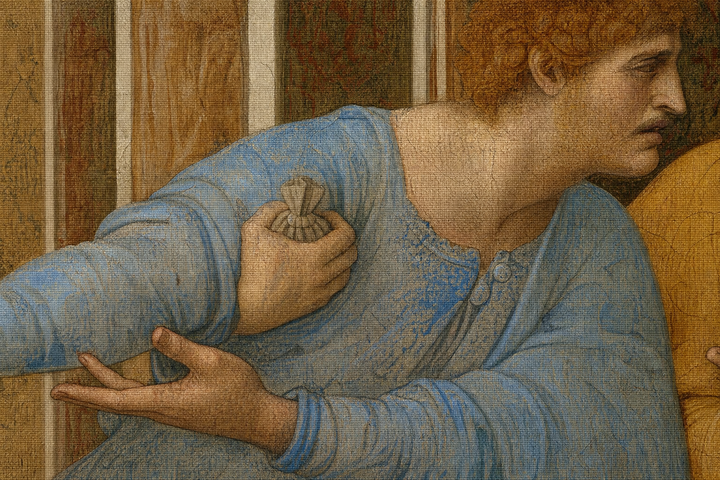
Judas recoils into shadow with the payment clutched in his fist, knocking the table as he goes. He is the only man leaning back while everyone else leans in.


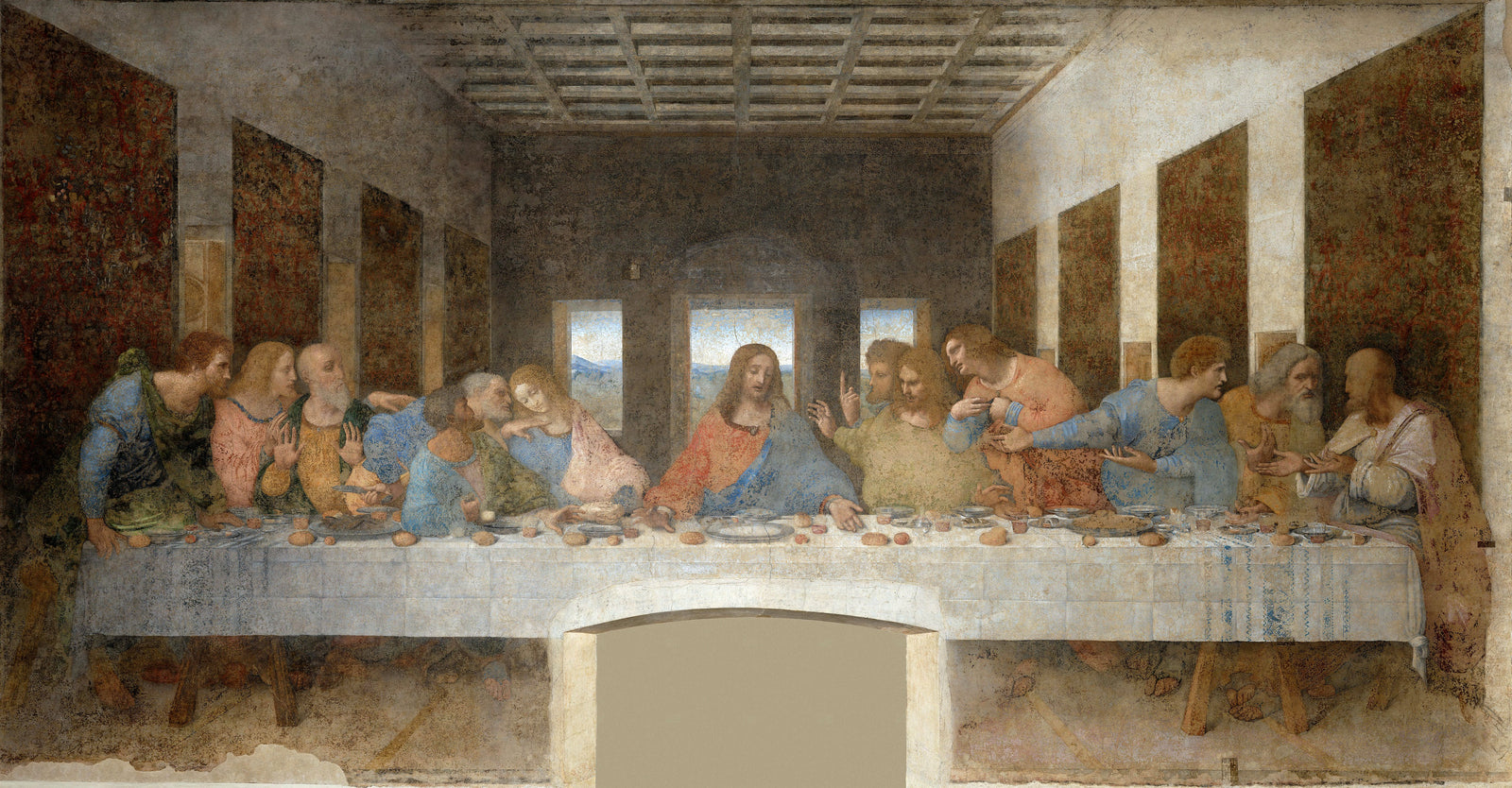
The Last Supper, 1495 to 1498. The original is a wall painting in the refectory of Santa Maria delle Grazie, Milan.
Old World Canvas · The Masterworks
Leonardo da Vinci · Wall painting, 1495 to 1498 · Santa Maria delle Grazie, Milan
He has just said that one of them will betray him. Eleven men react. One of them already knew.
A museum grade reproduction of the original
Order today, ready to hang by August 29
Museum weight 380gsm cotton canvas, printed with twelve channel archival pigment inks rated to resist fading for 100 years or more indoors, then hand stretched over kiln dried pine bars.
Every canvas is made to order. Printing and stretching take 1 to 3 business days. Tracked delivery takes 2 to 5 business days in the US, UK, Canada, Australia, and most of Europe. Shipping is free.
Hang it and live with it for 100 days. If it is not the piece you hoped for, send it back for a full refund and we cover the return. Transit damage is replaced free with a single photo.
Leonardo painted The Last Supper between 1495 and 1498 on the end wall of the dining hall at Santa Maria delle Grazie in Milan, for Duke Ludovico Sforza. It measures roughly 460 by 880 centimetres. He rejected true fresco, which demands speed, in favour of an experimental tempera and oil technique on dry plaster that let him work slowly and rework endlessly. It is why the painting exists as it does and why it began deteriorating within his lifetime. A doorway was cut through the lower centre in 1652. A restoration begun in 1978 finished in 1999. The room is now climate controlled and visits are timed.
The Painting · 1495 to 1498
Leonardo caught the exact second after the words landed, and built the whole room so your eye has nowhere to go but the man who said them.
A sentence has just been spoken and the table has come apart. Twelve men break into four groups of three, and every one of them is moving: half risen, turning to each other, hands open in protest, faces demanding to know who. In the middle of it the speaker sits perfectly still with his hands open on the cloth and his eyes down. One figure alone pulls back into the shadow, elbow knocking the table, a small bag clutched tight in his fist.
Leonardo engineered the calm. Every architectural line in the painted room, every ceiling beam and wall edge, runs to a single vanishing point directly behind the central head, so the room itself points at him no matter where you stand. He painted it between 1495 and 1498 on the end wall of a monastery dining hall in Milan, and he refused to use true fresco because it dries too fast to rework. That choice cost the world the painting: it began flaking within his own lifetime. A door was cut through the bottom of it in 1652. A restoration lasting 21 years finished in 1999. What survives is one of the most guarded objects on earth, and seeing it means a booked slot and 15 minutes.
Look Closer
The composition is an argument. Three details show you how it was built.
No. 1
Judas recoils into shadow with the payment clutched in his fist, knocking the table as he goes. He is the only man leaning back while everyone else leans in.
No. 2
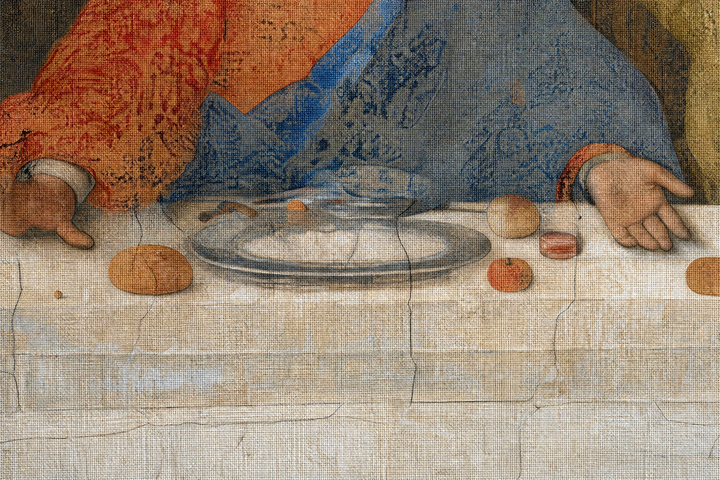
Palms up on the cloth, unmoving, at the exact center of the storm. The stillness is the composition's anchor and the reason the room reads as chaos around it.
No. 3
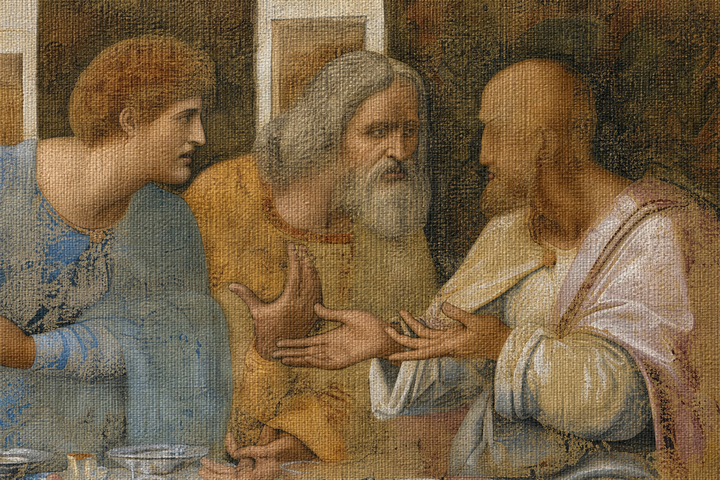
Even three seats away the reaction is total: arms up, bodies turned, the argument spreading outward. Leonardo let no one sit out the moment.
Printed at museum grade, so the details the story turns on stay razor sharp on your canvas.
The Canvas
A painting that has lasted since 1900 deserves better than a poster. Every canvas leaves the studio the way a conservator would ask.
Twelve channel archival pigment inks, independently rated to resist fading for 100 years or more indoors. The firelight stays warm for decades.

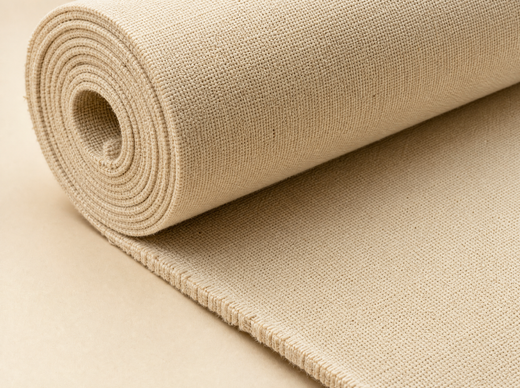
Museum weight woven cotton with a soft matte texture that holds the depth of Vinci's shadows instead of bouncing light off them.
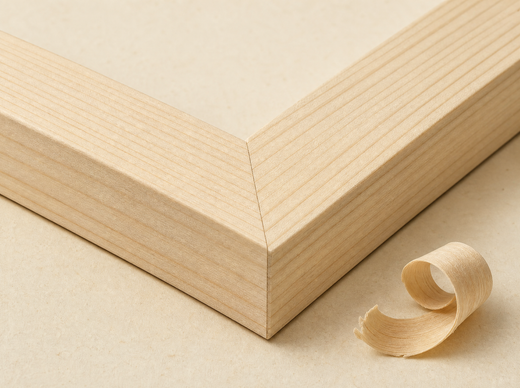
Hand stretched over solid kiln dried pine, cornered and tensioned so the canvas stays drum tight and never sags.
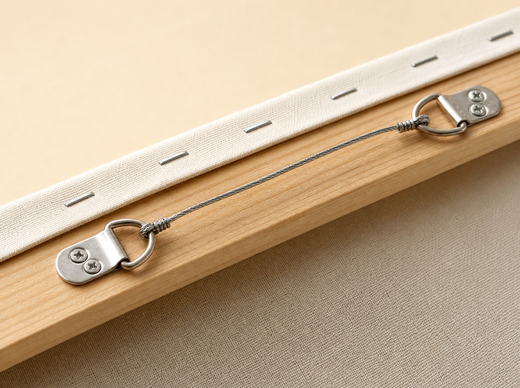
Hanging hardware arrives pre installed on every piece. Out of the box and on the wall in under five minutes, no tools.
Choose Your Finish
Both arrive ready to hang. The difference is the voice the painting takes on your wall.
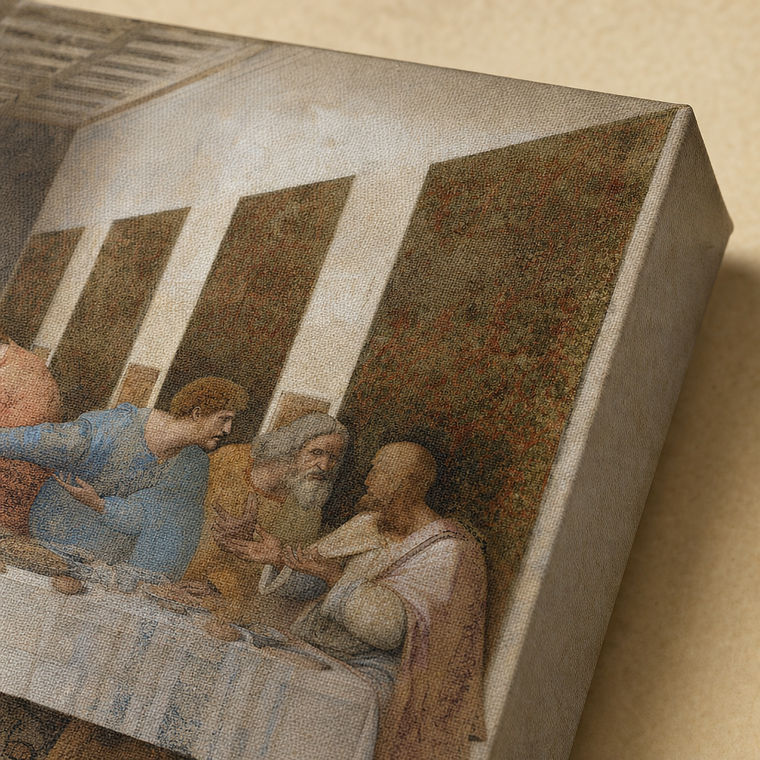
Gallery wrapped, the image folds around a deep 1.25 inch edge. Quiet and modern. The scene floats on the wall with nothing between you and the paint.
Choose it for
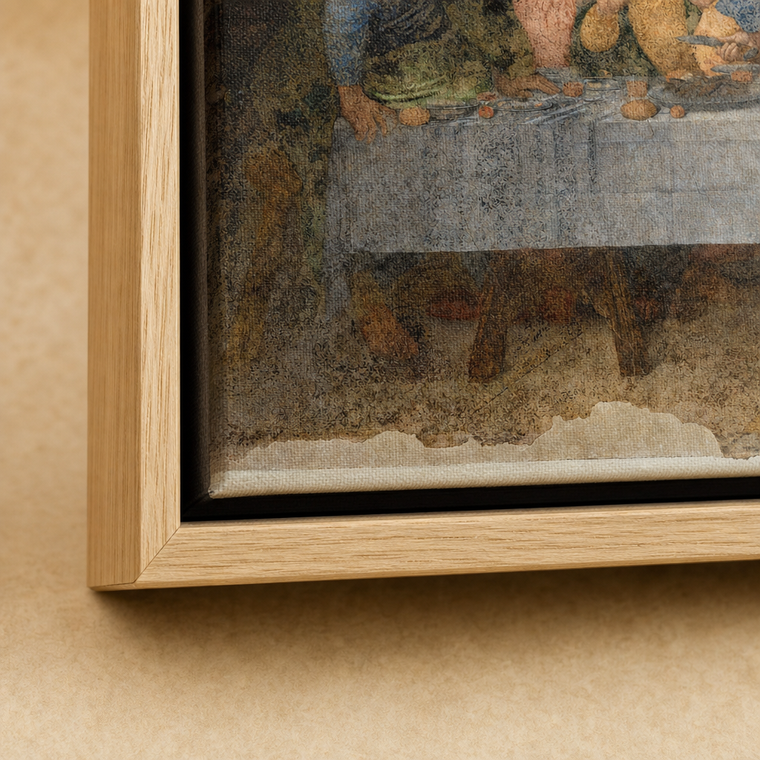
A solid wood floating frame with a fine shadow gap, the way museums case their canvases. The painting reads as the centerpiece of the room.
Choose it for
From Their Walls
Collectors tell us where it went and what changed in the room. Their words, kept whole.
“Bought the 48x24 for the dining room. The proportions are the whole point, it fills the wall above the table exactly the way the original fills that refectory.”
“I saw the original in Milan for 15 minutes behind glass. This hangs in my house and I can look as long as I want.”
“The panoramic shape is unusual and it makes the room. Colors are true to the restored version, not the oversaturated ones you see everywhere.”
Our Promise
Hang it. Live with it through morning light and lamplight. If it is not the piece you hoped for, send it back for a full refund and we cover the return.
Questions
Straight answers about what you receive, when it arrives, and how it is protected.
No, and this one could never be a canvas. The original is a wall painting roughly 460 by 880 centimetres in the refectory of Santa Maria delle Grazie in Milan, and it cannot leave the wall it was painted on. What you receive is a museum grade giclee reproduction on cotton canvas, hand stretched and ready to hang, printed edge to edge from the restored painting.
Because it is, and the reproduction is honest about it. Leonardo refused true fresco so he could work slowly, and used an experimental technique on dry plaster instead. It started flaking within his own lifetime. A door was cut through the bottom of the painting in 1652, taking Christ's feet with it. A 21 year restoration finished in 1999 and revealed the colours you see here. We print the painting as it survives, not a repainted fantasy of how it looked in 1498.
18x9, 24x12 suit desks, shelves, and small nooks. 30x15, 36x18 hold bedroom, office, console and mantel walls. 48x24 and 60x30 are the statement sizes. When in doubt, go one size larger. Undersized art is the most common regret we hear.
Each canvas is made to order. Printing and stretching take 1 to 3 business days, then tracked delivery takes 2 to 5 business days in the US, UK, Canada, Australia, and most of Europe. Shipping is free and you receive tracking the moment it leaves.
Send one photo of the damage and we ship a replacement at no cost. No return required, no forms, no debate.
Yes. Hanging hardware is pre installed on both the frameless and the wooden version. Unbox it, place a single nail or hook, and hang. Under five minutes, no tools.
Keep it out of direct midday sun and dust it with a dry soft cloth. The pigment inks are rated to resist fading for 100 years or more indoors, so care really is this simple.
Anything else, write to hello@oldworldcanvas.com and a person answers within a day.