
No. 1
The thumbs that taught the world
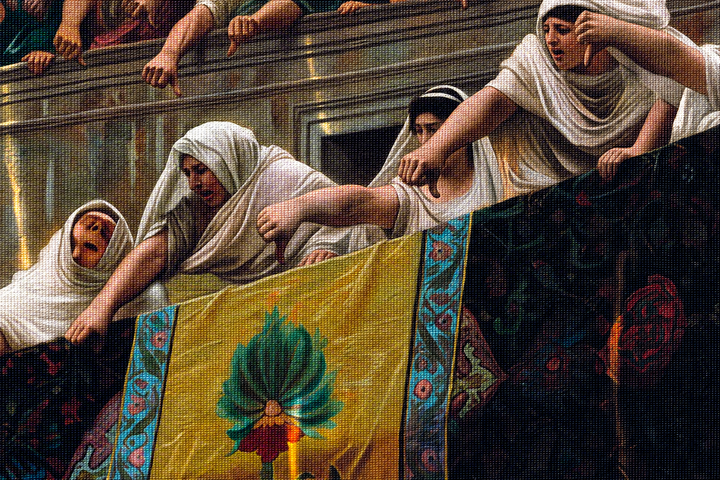
Rome's holiest women lean over the marble with thumbs turned down. No ancient text ever settled the gesture's direction. Gérôme decided, and every thumbs down since has carried his verdict.


Pollice Verso, 1872. The original hangs in the Phoenix Art Museum in Arizona.
Old World Canvas · The Masterworks
Jean-Léon Gérôme · Oil on canvas, 1872 · Phoenix Art Museum
Two fingers ask for mercy. The thumbs answer. This is the canvas that taught the world the gesture.
A museum grade reproduction of the 1872 original
Order today, ready to hang by October 26
Museum weight 380gsm cotton canvas, printed with twelve channel archival pigment inks rated to resist fading for 100 years or more indoors, then hand stretched over kiln dried pine bars.
Every canvas is made to order. Printing and stretching take 1 to 3 business days. Tracked delivery takes 2 to 5 business days in the US, UK, Canada, Australia, and most of Europe. Shipping is free.
Hang it and live with it for 100 days. If it is not the piece you hoped for, send it back for a full refund and we cover the return. Transit damage is replaced free with a single photo.
Jean-Léon Gérôme of Paris was, by 1880, arguably the most famous living painter on earth, a master of the French academic style and a professor at the École des Beaux-Arts. He built that fame on archaeological precision: for Pollice Verso he modeled the gladiators' armor on pieces excavated at Pompeii. The finished canvas set a record price when American department store magnate Alexander Turney Stewart paid 80,000 francs for it and exhibited it in New York. It hangs today in the Phoenix Art Museum, and in 2000 a reproduction of it convinced Ridley Scott to direct Gladiator before he had read the script.
The Painting · 1872
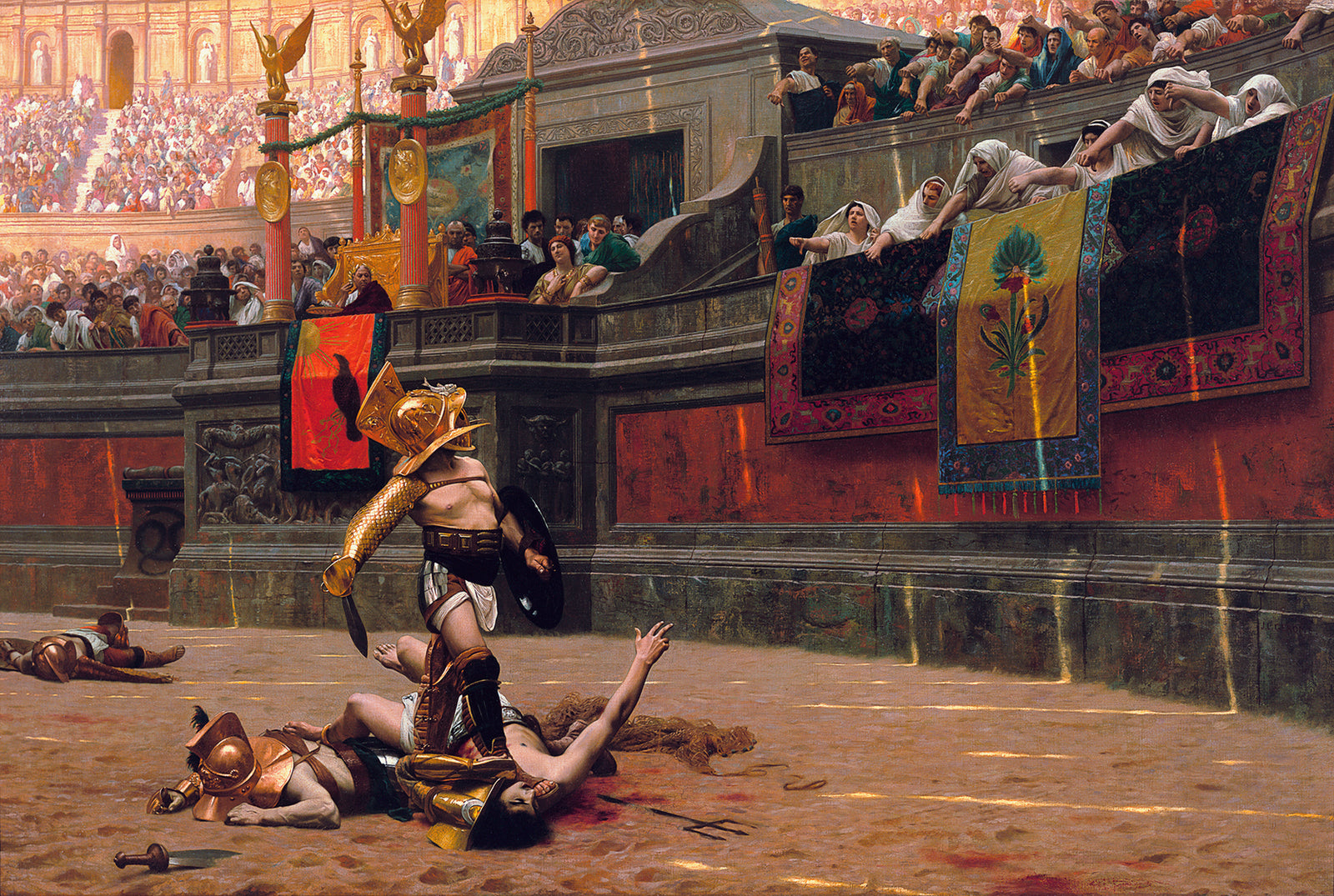
Gérôme freezes the half second between the plea and the verdict: a victor's foot pinning his opponent to the sand, two fingers raised for mercy, and fifty thousand Romans deciding what happens next.
The fight is over and the judgment has begun. The murmillo stands in gilded armor, his foot pinning the fallen retiarius to the sand. The beaten man turns toward the stands and raises two fingers, the gladiator's plea for mercy. Above him the Vestal Virgins, Rome's holiest women, lean over the marble with their thumbs turned down. The emperor has not signaled. The crowd roars for the finish.
This canvas is why the world reads thumbs down as death. No Roman source ever settled which way the thumb turned, and scholars argue about it still, but Gérôme chose down and his choice outlived the empire. More than a century later, producers slid this image in front of Ridley Scott before he had read a page of the Gladiator script. He looked at it and signed on. The film, the gesture, the way we picture the arena: it all runs through this one canvas.
Look Closer
The whole verdict lives in three gestures. Gérôme painted them so precisely that the world adopted one of them.
No. 1
Rome's holiest women lean over the marble with thumbs turned down. No ancient text ever settled the gesture's direction. Gérôme decided, and every thumbs down since has carried his verdict.
No. 2
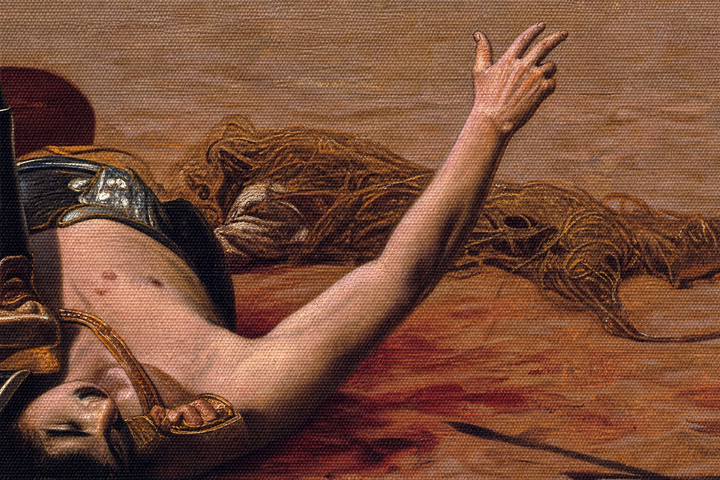
The fallen retiarius raises the gladiator's plea for mercy toward the stands. One hand asking, an entire arena answering. The painting hangs in the space between them.
No. 3
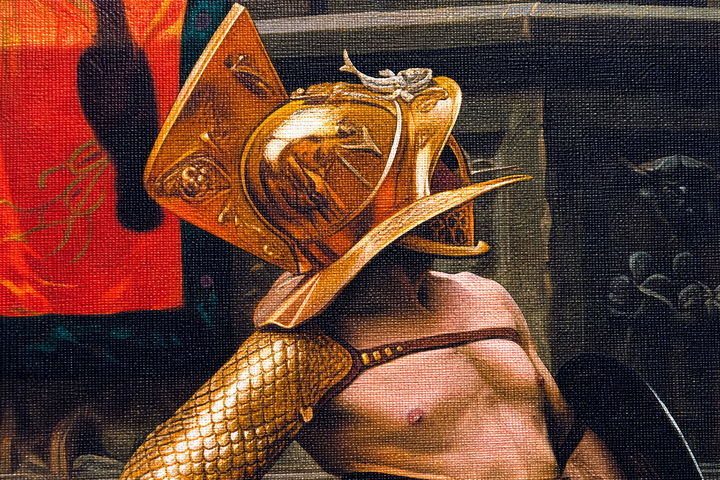
Gérôme modeled the armor on pieces excavated at Pompeii. The grille hides the victor's eyes, so the only face in the duel belongs to the man about to die.
Printed at museum grade, so the gestures the verdict turns on stay razor sharp on your canvas.
The Canvas
A painting that has lasted since 1872 deserves better than a poster. Every canvas leaves the studio the way a conservator would ask.
Greenguard Gold certified pigment inks hold their color for decades indoors. No yellowing, no fading, no fumes in the room they hang in.
Kiln dried, knot free, warp resistant pine from responsibly managed forests. The canvas stays tight because the wood underneath does not move.
Every canvas is pulled, cornered and tensioned by hand, evenly across the whole face. Never sagging, never rippled at the edges.
Gallery wrapped with the image folding around a deep edge, or set in a solid wood floating frame with a fine shadow gap. Both arrive ready to hang.
A soft matte surface that holds the depth of the shadows instead of bouncing light back at you. It is how conservators prefer a canvas to read under a lamp.
Corner protected, wrapped and boxed flat in a carton sized to the canvas. If anything arrives marked, one photo gets you a replacement at no cost.

Choose Your Finish
Both arrive ready to hang. The difference is the voice the painting takes on your wall.
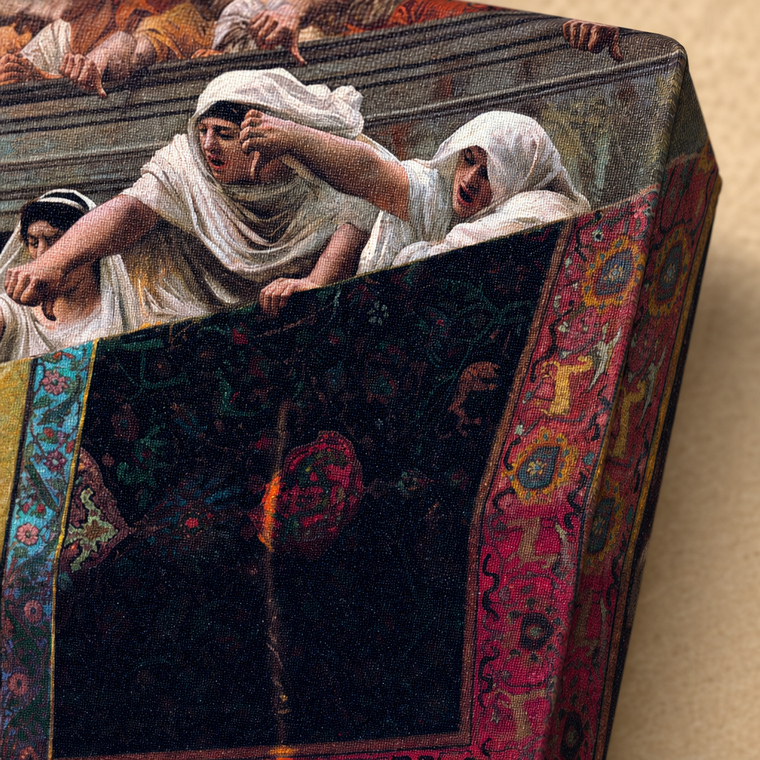
Gallery wrapped, the image folds around a deep 1.25 inch edge. Quiet and modern. The scene floats on the wall with nothing between you and the paint.
Choose it for
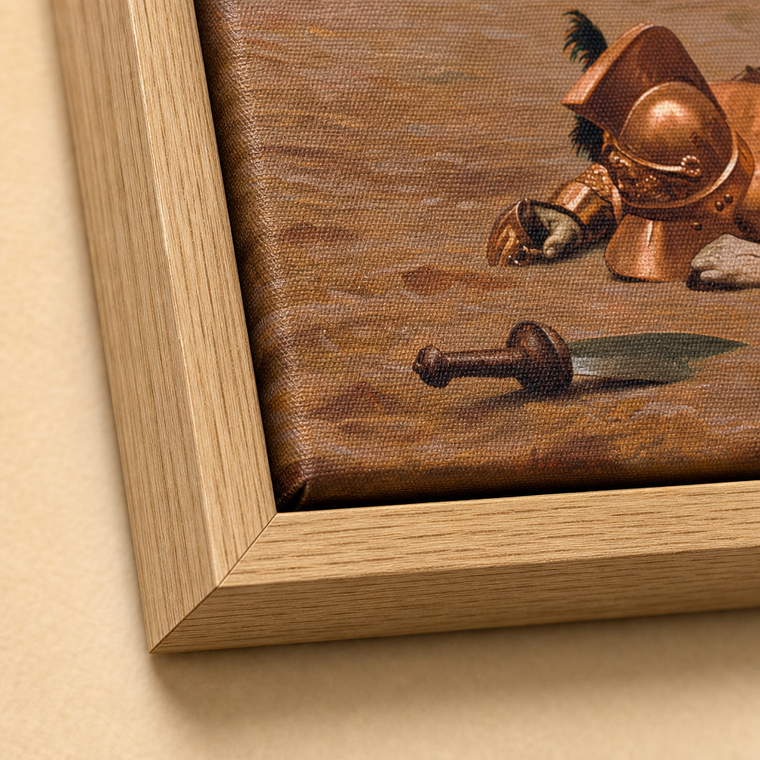
A solid wood floating frame with a fine shadow gap, the way museums case their canvases. The painting reads as the centerpiece of the room.
Choose it for
From Their Walls
Collectors tell us where it went and what changed in the room. Their words, kept whole.
“Bought the 36x24 for my office after rewatching Gladiator. Guests ask about it every single visit, and the detail in the armor is unreal at this size.”
“Richer color than I expected. The arena sand almost glows in afternoon light. Fast shipping and the stretch is drum tight.”
“I saw the original in Phoenix a few years back. This hangs above my desk now and it honestly holds up. The thumbs still give me chills.”
Our Promise
Hang it. Live with it through morning light and lamplight. If it is not the piece you hoped for, send it back for a full refund and we cover the return.
Questions
Straight answers about what you receive, when it arrives, and how it is protected.
No. The original hangs in the Phoenix Art Museum in Arizona, one of the most famous nineteenth century paintings in an American collection, and you can stand in front of it there. What you receive is a museum grade giclee reproduction on cotton canvas, hand stretched and ready to hang, printed edge to edge from the painting.
Yes. The producers showed Ridley Scott a reproduction of Pollice Verso before he had read the script, and Scott has said that single image of Rome in its glory and wickedness is what made him take the film. The armor, the arena light, and the thumbs verdict in the movie all trace back to this canvas.
12x8 suits shelves, desks, and small nooks. 18x12 and 24x16 hold their own in hallways and on bedroom or office walls. 30x20 and 36x24 carry consoles, mantels, and dining rooms, and 48x32 is the statement size above a sofa. When in doubt, go one size larger. Undersized art is the most common regret we hear.
Each canvas is made to order. Printing and stretching take 1 to 3 business days, then tracked delivery takes 2 to 5 business days in the US, UK, Canada, Australia, and most of Europe. Shipping is free and you receive tracking the moment it leaves.
Send one photo of the damage and we ship a replacement at no cost. No return required, no forms, no debate.
Yes. Hanging hardware is pre installed on both the frameless and the wooden version. Unbox it, place a single nail or hook, and hang. Under five minutes, no tools.
Keep it out of direct midday sun and dust it with a dry soft cloth. The pigment inks are rated to resist fading for 100 years or more indoors, so care really is this simple.
Anything else, write to hello@oldworldcanvas.com and a person answers within a day.