
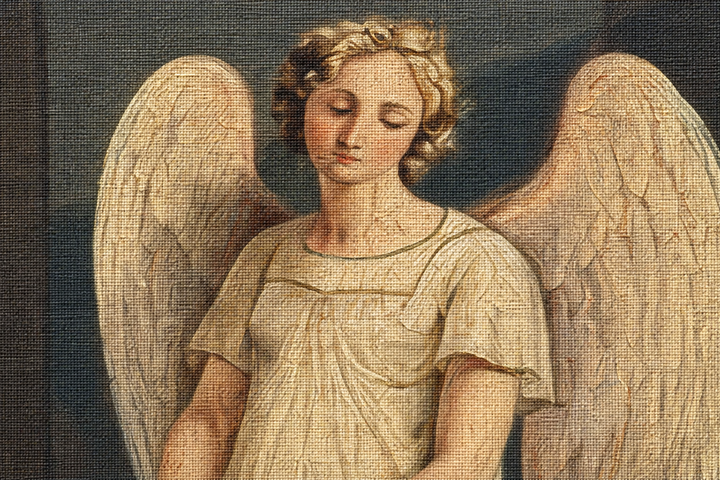
No. 1
The angel who does not grieve
She has seen the whole board. Her calm, hands folded while the devil gloats, is the painting's quiet verdict on how this game ends.


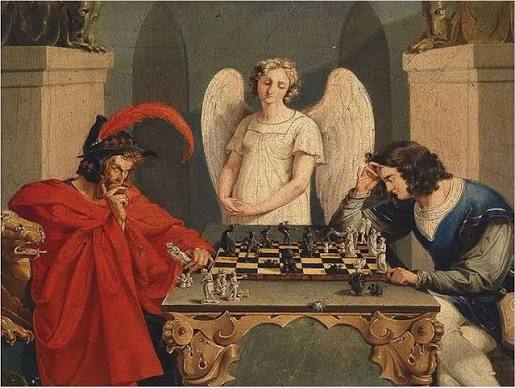
The Devil's Checkmate, 1831. The original sold at auction in 1999 and hangs in a private collection.
Old World Canvas · The Masterworks
Moritz Retzsch · Oil on canvas, 1831 · Private collection
The devil gloats, the young man despairs, the title says checkmate. Paul Morphy proved the title was a lie.
A museum grade reproduction of the 1831 original
Order today, ready to hang by August 27
Museum weight 380gsm cotton canvas, printed with twelve channel archival pigment inks rated to resist fading for 100 years or more indoors, then hand stretched over kiln dried pine bars.
Every canvas is made to order. Printing and stretching take 1 to 3 business days. Tracked delivery takes 2 to 5 business days in the US, UK, Canada, Australia, and most of Europe. Shipping is free.
Hang it and live with it for 100 days. If it is not the piece you hoped for, send it back for a full refund and we cover the return. Transit damage is replaced free with a single photo.
Moritz Retzsch of Dresden was one of the most famous illustrators in Europe, known for his outline engravings of Goethe's Faust. In 1831 he painted a young man playing the devil for his soul, an angel standing witness. Engravings of it crossed the world, preachers built sermons on it, and in 1888 the Columbia Chess Chronicle printed the story of Paul Morphy studying the board and declaring the young man could still win. The original sold at Christie's in 1999 and has hung in a private collection ever since.
The Painting · 1831
Moritz Retzsch painted the second the wager seems lost: the devil already reaching for his winnings, the young man's head in his hand, and one calm witness who refuses to grieve.
The stakes on this table are not money. The devil lounges in scarlet, one piece dangling from his fingers, already tasting the win. Across from him the young man presses his forehead into his palm, staring at a board that looks finished. Between them stands the angel, hands folded, watching. She does not plead and she does not panic. She looks like someone who can see one square the players cannot.
Then comes the story chess players have told since 1888, when the Columbia Chess Chronicle first printed it. Paul Morphy, the greatest player alive, stood before this scene, read the board piece by piece, and saw what everyone had missed. The young man was never lost. One move remained, a check against the devil himself, and it flipped the entire game. Retzsch had painted a false checkmate, a defeat so convincing even its victim believed it. Despair is not a fact. Sometimes hope just waits on a dark square for someone willing to take a second look.
Look Closer
What we call the end is often only the limit of our own sight. These are the three corners where Retzsch hid the verdict.
No. 1
She has seen the whole board. Her calm, hands folded while the devil gloats, is the painting's quiet verdict on how this game ends.
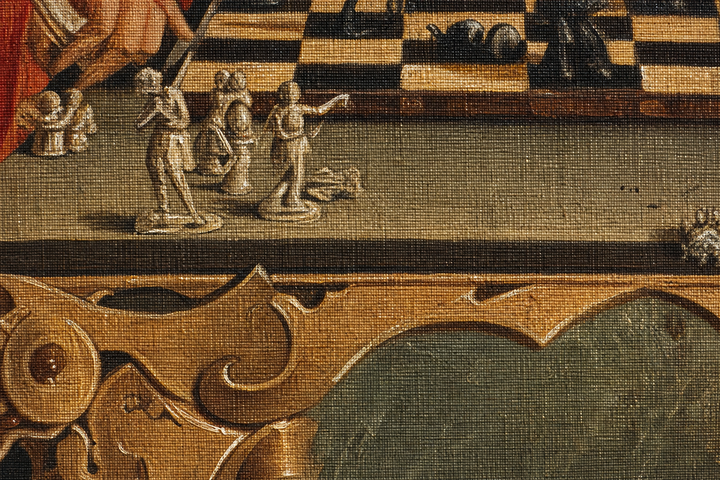
No. 2
Retzsch painted a real position, and players have set it on real boards since 1888. Hidden in the pieces, the legend says, is one overlooked move, a check against the devil himself.
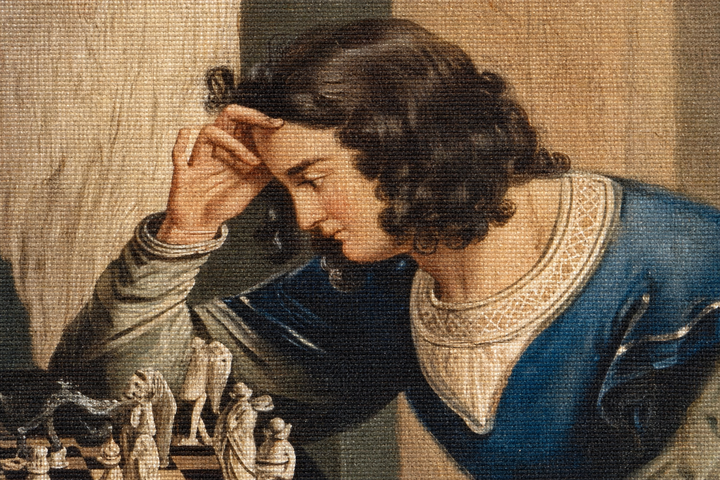
No. 3
He believes the title. Despair painted one square away from rescue, while the saving move sits on the board in front of him. That is the whole sermon of this painting.
Printed at museum grade, so the details the legend turns on survive on your canvas.
The Canvas
A painting that has lasted since 1831 deserves better than a poster. Every canvas leaves the studio the way a conservator would want it built.
Twelve channel archival pigment inks, independently rated to resist fading for 100 years or more indoors. The firelight stays warm for decades.

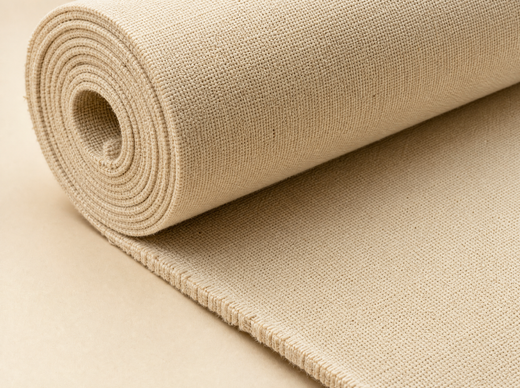
Museum weight woven cotton with a soft matte texture that holds the depth of Retzsch's shadows instead of bouncing light off them.
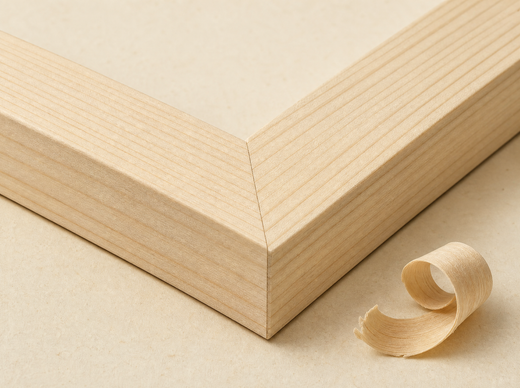
Hand stretched over solid kiln dried pine, cornered and tensioned so the canvas stays drum tight and never sags.
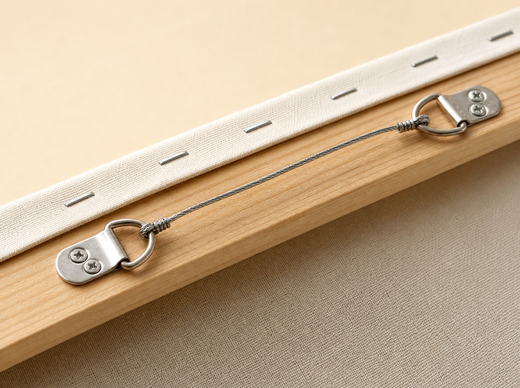
Hanging hardware arrives pre installed on every piece. Out of the box and on the wall in under five minutes, no tools.
Choose Your Finish
Both arrive ready to hang. The difference is the voice the painting takes on your wall.
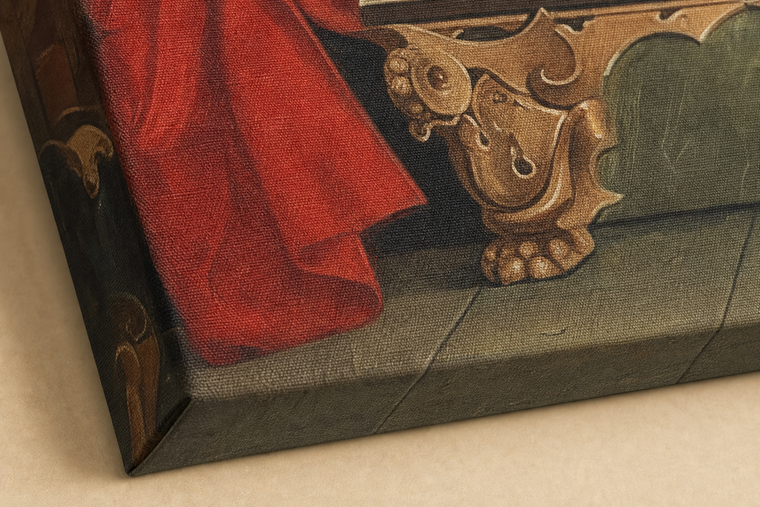
Gallery wrapped, the image folds around a deep 1.25 inch edge. Quiet and modern. The scene floats on the wall with nothing between you and the paint.
Choose it for
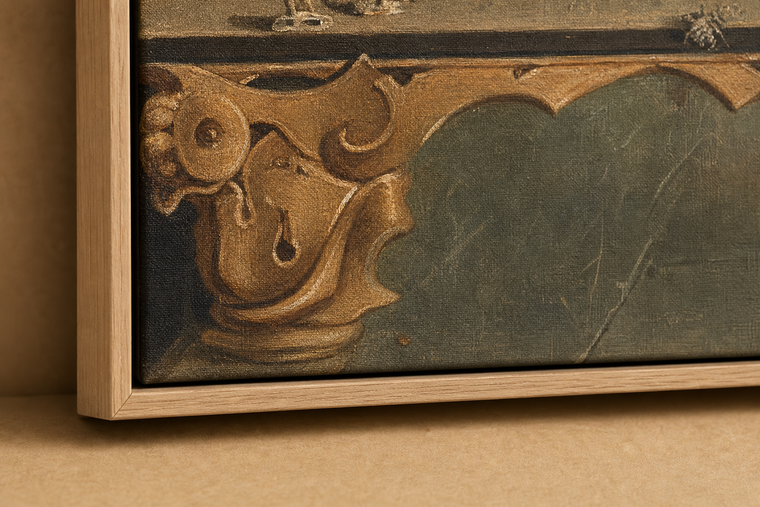
A solid wood floating frame with a fine shadow gap, the way museums case their canvases. The painting reads as the centerpiece of the room.
Choose it for
From Their Walls
Collectors tell us where it went and what changed in the room. Their words, kept whole.
“It hangs over the chess table and no game finishes without someone asking about it. I tell the Morphy story every time and it never gets old.”
“He stood in front of it for five minutes and then we talked about giving up and not giving up. A painting that starts that conversation earns its wall.”
“I have bought canvas prints before and they felt like posters. This one is drum tight with real weight, and the reds in the devil's robe are deep.”
Our Promise
Hang it. Live with it through morning light and lamplight. If it is not the piece you hoped for, send it back for a full refund and we cover the return.
Questions
Straight answers about what you receive, when it arrives, and how it is protected.
No. The original sold at Christie's in 1999 and hangs in a private collection, which means no museum ticket can put you in front of it. A faithful reproduction is the only way to live with this painting. You receive a museum grade giclee on cotton canvas, hand stretched and ready to hang.
It first appeared in print in 1888 in the Columbia Chess Chronicle, decades after the fact, so historians treat it as legend rather than record. What is certain is that players have set this position on real boards for over a century, and the argument over that one hidden move is half the reason the painting never left chess culture. We tell the story as it has been told since 1888, and we print the board exactly as Retzsch painted it.
12x9 and 16x12 suit shelves, desks, and small nooks. 24x18 holds a hallway or reading corner. 32x24 and 40x30 carry bedroom and office walls, and 48x36 is the statement size above a sofa or mantel. When in doubt, go one size larger. Undersized art is the most common regret we hear.
Each canvas is made to order. Printing and stretching take 1 to 3 business days, then tracked delivery takes 2 to 5 business days in the US, UK, Canada, Australia, and most of Europe. Shipping is free and you receive tracking the moment it leaves.
Send one photo of the damage and we ship a replacement at no cost. No return required, no forms, no debate.
Yes. Hanging hardware is pre installed on both the frameless and the wooden version. Unbox it, place a single nail or hook, and hang. Under five minutes, no tools.
Keep it out of direct midday sun and dust it with a dry soft cloth. The pigment inks are rated to resist fading for 100 years or more indoors, so care really is this simple.
Anything else, write to hello@oldworldcanvas.com and a person answers within a day.